Actually, being Canadian, this isn't a holiday for me, but I like it anyway. It's important, though I sometimes regret its need. There's something appealing about the idea I've heard expressed, that we shouldn't have such markers because they highlight separation, and black history should be integrated entirely within general American history. There is, in such a thought, a powerful sense of arrival, of equality. But do we live in such a society yet? A society where minorites, and their histories, have their proper and honest representation within our history and cultural self-definitions? Where these voices, and stories, won't be lost beneath a white tide?
I don't think so. We're not there yet. And so it's important to have such markers, such signposts to memory and, I hope, future action. I wanted to do something on the blog, and so I thought I'd focus on some great black authors. These writers had a dream, too, and their dreams are made real in the words of their stories.
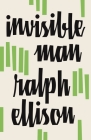
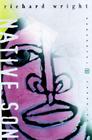
First, the classics. It's hard to look at black writers in America without looking at Ralph Ellison and Richard Wright. Both of these writers are important to me. Ellison's Invisible Man is a thoughtful and brilliant evocation of the forced invisibility of a black man in a white world. Wright's Native Son reveals life in black Chicago, simmering with rage and the power of a voice being found.
Both books should be read. First, because they are great literature. Second, because they are important, both for the dreams they make real and for the cultural impact they've had.
Shop Indie Bookstores
Shop Indie Bookstores
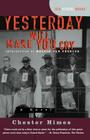
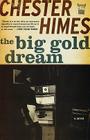
Chester Himes is another writer who is important to me. His prison novel Yesterday Will Make You Cry is an impressive work dealing with race and justice in America, and it deserves wider recognition and circulation. Himes left America, feeling that it was too difficult to be both free and black there, but he returned to it in his writing, in particular with his series of crime novels, in which he set mysteries in a Harlem under the eye of his two black detectives, Grave Digger Jones and Coffin Ed Johnson.
Shop Indie Bookstores
Shop Indie Bookstores
James Baldwin was one of the great intellectuals of the Civil Rights Movement, and the honesty and incisiveness of books like The Fire Next Time helped shape me, and helped shape the way I viewed the world, showing me how a human lens was always needed when peering at any ideology.
Shop Indie Bookstores
The Known World, by Edward P. Jones, is a novel about slavery. It's not an easy book, uninterested as it is in pat conclusions and easy moral summaries. It's a look at the human stories of slavery, the all too easy choices at the heart of devaluing others for your own gain, and the cultural patterns of power that enforce such choices.
Shop Indie Bookstores
All these books are great. All have affected me in the way that great literature should.
Yet, if days such as this are to be more than mere markers of remembrance they must help shape who we are and who we want to be. They must shape us going forward. They must shape our dreams and actions.
There are great novels by minority writers coming out all the time, yet we need to keep reading, and supporting, them. There is a disparity in the publishing world, the field still tilted away from minority writers. All that uphill running...
We can all do something, even if it's something as simple as reading. A simple choice, a step forward. It would be great, I think, if we could all pick a book by a black author (or another minority) and read. And talk it! Share it! Blog it! Tweet it! Facebooker it! Word of mouth, the voices of individuals coming together to form the voice of a community, can still help flatten the playing field.
As for me, I'm going to read Man Gone Down, by Michael Thomas.
Shop Indie Bookstores

